If you source soft home furnishings for a retailer in the UK, Europe, Australia, or the United States, there is a good chance that some of what is already on your shelves came from Panipat, even if you did not know it.
Panipat, a city of about 750,000 people in Haryana, northern India, is one of the world’s most concentrated hubs for home furnishing manufacturing. It is not the most famous city in global retail supply chains. It does not have the recognition of Tiruppur for knitwear or Karur for kitchen textiles. But for throws, blankets, rugs, cushion covers, and soft home made-ups, Panipat is where a significant portion of what the world’s living rooms are furnished with actually comes from.
This article explains why.
The History Behind the Cluster
Panipat’s textile manufacturing heritage predates modern global supply chains by generations. The city’s handloom tradition dates back centuries, but its modern industrial identity was shaped in the mid-20th century by the shoddy and recycled textiles industry. Panipat earned the nickname “The Cast-Off Capital” for its processing of recycled fibres into blankets and other home textiles, a practice that was ahead of its time from a circularity standpoint.
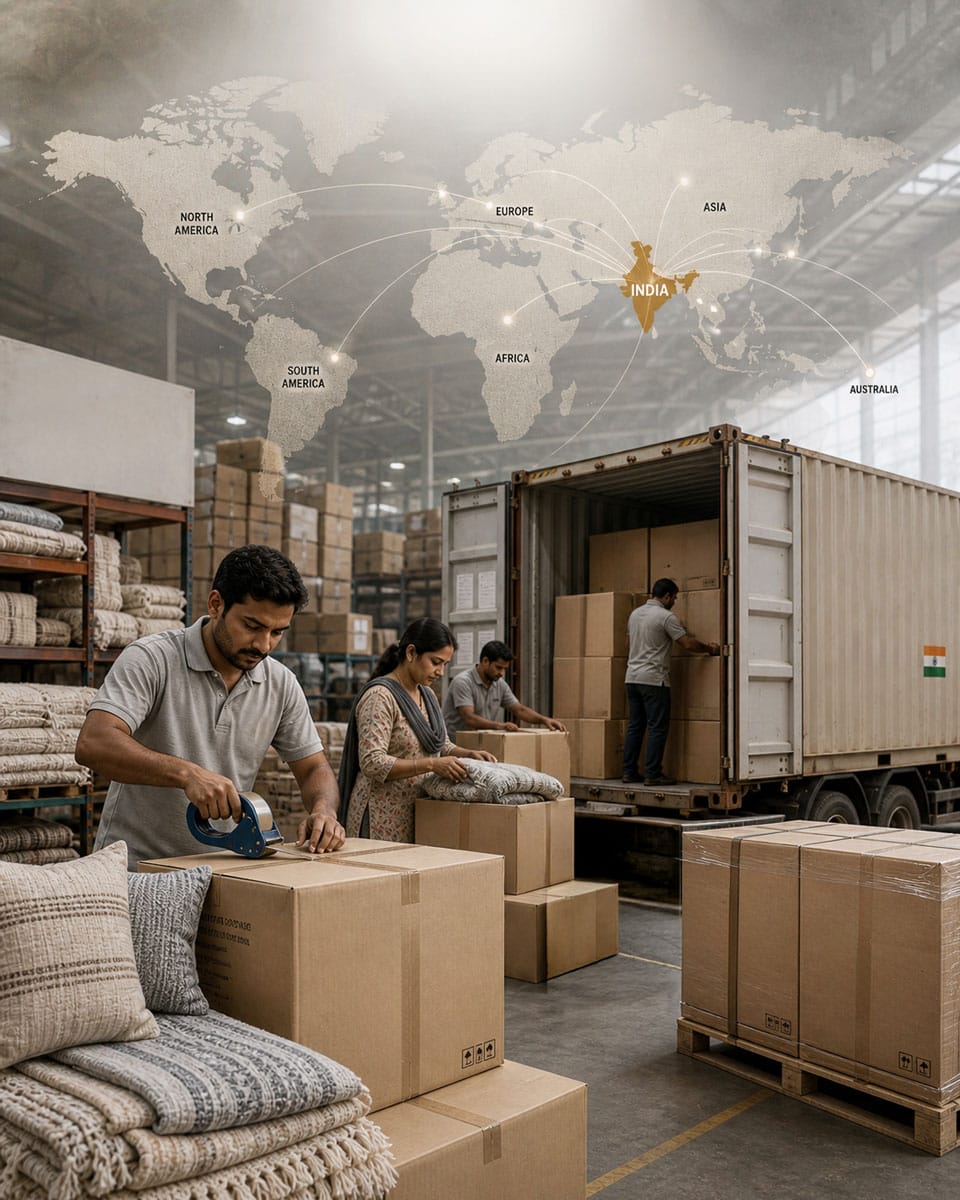
Over the past 30 to 40 years, the city transitioned into modern manufacturing. Today, Panipat has more than 3,000 registered MSME textile units, employs over a million workers directly and indirectly, and generates home textile exports that supply buyers across Europe, North America, Australia, and the Middle East.
What Panipat Actually Manufactures
The product range that comes out of Panipat is broader than most buyers expect.
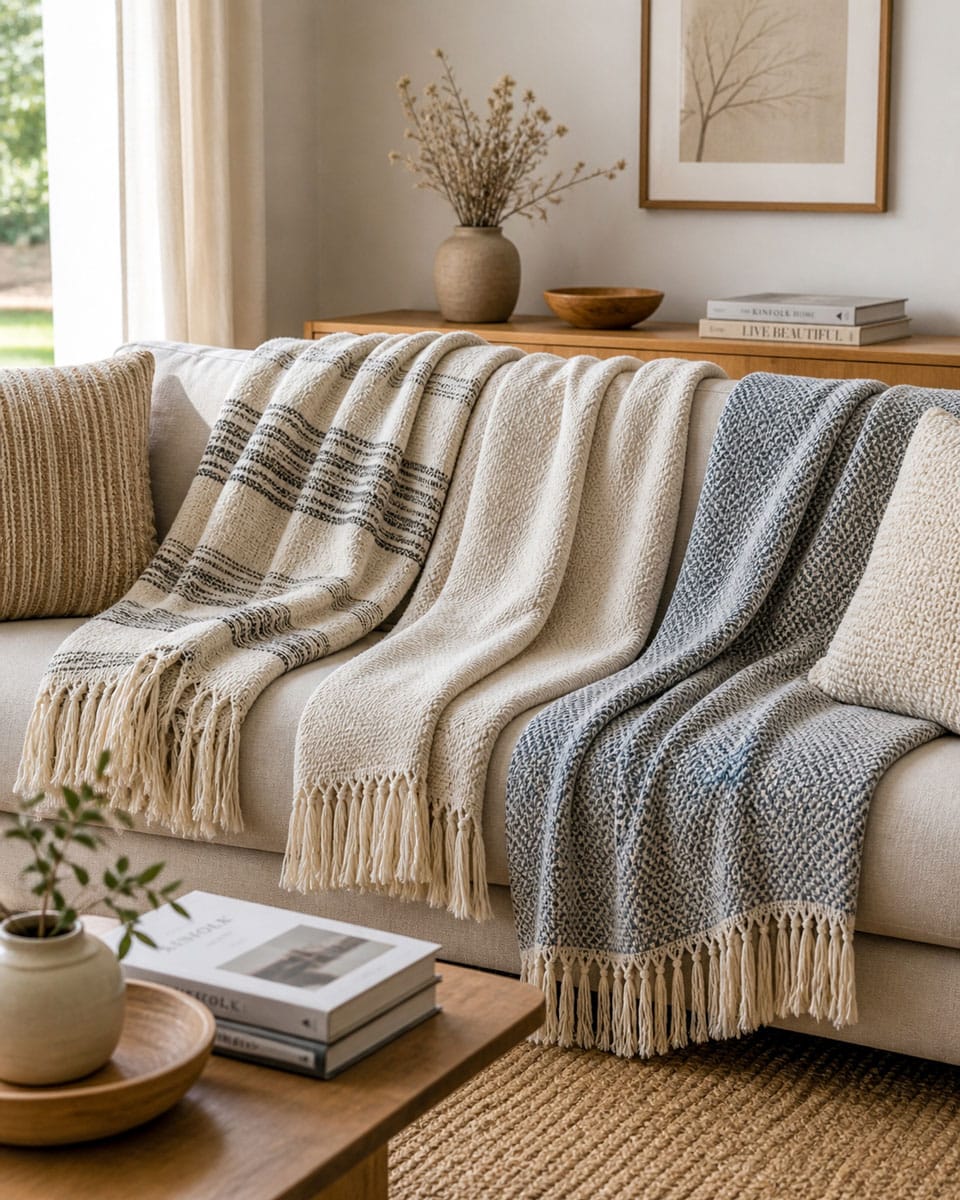
Blankets and throws are the category Panipat is most associated with. The city manufactures woven throws, knitted throws, micro-fiber throws, mink blankets, polar fleece blankets, and acrylic blankets at volumes that few other manufacturing clusters in the world can match.
Cushion covers and filled articles including cushion inserts, poufs, and storage baskets represent another significant category with a large number of established manufacturers.
Rugs and bath mats are produced in large quantities, with both machine-made and handloom options available across a wide range of price points.
Bedding, including bed sheets, duvet covers, comforters, and mattress protectors, is manufactured by a growing number of facilities in and around the city.
A buyer visiting Panipat can source the majority of a home furnishings range from within a 50 km radius.
Why Retailers Keep Coming Back
Manufacturing Infrastructure at Scale
Panipat is not a cluster of cottage industries. It has large-scale, modern manufacturing facilities with sophisticated machinery for weaving, tufting, knitting, stitching, and finishing. A well-established Panipat manufacturer can handle a major retailer’s seasonal programme without disruption to other buyer relationships.
Vertical Integration
Many of the established manufacturers in Panipat control their entire production process in-house, from yarn procurement through to finished product and export packaging. This gives buyers visibility, predictability, and fewer points of failure in the supply chain.
Competitive Pricing Without Sacrificing Quality
India’s cost structure for home textile manufacturing is among the most competitive in the world. This is not a race to the bottom. The best Panipat manufacturers combine competitive pricing with the certifications, QC processes, and production standards that major retailers require. Solar-powered manufacturing operations and vertical integration further reduce cost per unit without cutting corners on quality.
Design Capability
The assumption that Indian manufacturers only work from buyer-supplied designs is outdated. A number of established Panipat manufacturers have in-house design teams and market specialists with experience in the US, European, and Australian retail markets. They can develop a seasonal range with you, not just produce to your specification.
Certification and Compliance Infrastructure
The most established manufacturers in Panipat hold the full set of certifications major retailers require: OEKO-TEX Standard 100, BSCI, SEDEX, and GRS. This is not exceptional at the top end of the market. It is expected. If you are sourcing from a manufacturer who does not hold current certifications, you are working with a second-tier supplier and absorbing compliance risk that your retailer programme will eventually surface.
What You Should Know Before You Go
Not All Manufacturers Are the Same
Panipat has thousands of textile units. Many of them are small, use outdated equipment, and subcontract to other units when orders exceed their capacity. The fact that a company is based in Panipat does not mean it meets the standards your compliance team requires.
The distinction that matters most is between manufacturers and traders. A manufacturer owns and operates the production facility. A trader sources from manufacturers and adds a margin. Both exist in Panipat. Know which one you are dealing with.
Visit Before You Commit
A factory visit is irreplaceable. You can learn more about a manufacturer’s capabilities, workforce, and equipment in two hours on the floor than in two months of email exchanges.
When you visit, pay attention to: the condition of the machinery, the organisation of the production floor, the QC process as it is actually happening, the quality of work in progress, and whether the team can answer specific technical questions about your product category without hesitation.
If an in-person visit is not possible, ask for a live video walkthrough of the facility. A manufacturer with nothing to hide will arrange this without resistance.
Plan for Lead Times
The combination of sample development and production typically runs 75 to 120 days for a woven or knitted throw programme. Buyers who try to compress this timeline consistently encounter problems. Plan your sourcing calendar with realistic lead times built in, particularly for autumn-winter programmes.
The Right Partners Are Not Hard to Find
The manufacturers worth working with have a track record: long-term relationships with major international retailers, current certifications, modern facilities, and a team that understands what your market requires. This narrows the field considerably.
Do not choose a manufacturer on price alone. The manufacturers who compete primarily on price are almost always the ones who cut corners on QC, use subcontractors without disclosing it, and produce bulk goods that do not match the approved sample.
The Case for Panipat in 2026
India’s position in global home textile supply chains has strengthened in recent years. Buyers who once sourced primarily from China have diversified into India, driven by a combination of trade policy considerations, cost changes, and increasing scrutiny of supply chain ethics. Panipat has been a direct beneficiary of this shift.
The manufacturers who have benefited most are the ones who invested early in infrastructure, certifications, and design capability. They were ready when the demand came. And they remain ready now.
We have been part of Panipat’s textile manufacturing ecosystem since 1996. Our three facilities cover 1.2 million sq. ft. We manufacture across six home furnishing categories: rugs & carpets, bathmats, cushions & throws, poufs & stools, storage baskets, and tote bags. We export to buyers in Australia, the UK, Europe, and the United States. If you would like to see what we do, visit sheentexindia.com or reach out directly.