A quote for the same product from two different suppliers can look very different once shipping terms are factored in, and the reason is usually Incoterms rather than the product itself. For a buyer new to importing, the terms attached to a quote determine who pays for what, who carries the risk at each stage, and how much the number on the invoice actually tells you. This guide explains the terms that come up most often when importing home textiles from India.
What Incoterms actually are
Incoterms are a standard set of international trade terms that define, at a fixed point in the shipping journey, when the seller’s responsibility ends and the buyer’s begins. They cover who arranges and pays for transport, who insures the goods, and who is responsible if something goes wrong at each stage. They do not set the price. Two suppliers can quote the same Incoterm and still charge different amounts, but the Incoterm does tell you exactly what that price includes and does not include.
The terms you will see most often in this trade
A handful of terms cover most home textile shipments from India, and each shifts responsibility to a different point in the journey.
- EXW (Ex Works). The buyer takes responsibility from the supplier’s factory door. The buyer arranges and pays for transport, export clearance, shipping and import clearance. This gives the buyer the most control but also the most to manage.
- FOB (Free On Board). The supplier delivers the goods to the port and handles export clearance and loading onto the vessel. The buyer takes responsibility once the goods are on board, and arranges the ocean freight, insurance and import clearance from there. This is the most common term in this trade, because it splits responsibility at a clear, practical point.
- CIF (Cost, Insurance and Freight). The supplier arranges and pays for the ocean freight and insurance to the destination port, and the price quoted includes these. The buyer takes over once the goods arrive at that port and handles import clearance and onward delivery from there.
- DAP (Delivered At Place). The supplier arranges delivery all the way to an agreed location in the buyer’s country, though the buyer is still usually responsible for import duties and clearance at that point.
Moving down this list shifts more of the shipping process, and more of the cost, onto the supplier’s side of the quote. A buyer comparing quotes needs to know which term each one uses before comparing the number itself.
How the choice affects cost and risk
A lower quote under EXW is not necessarily a cheaper shipment once freight, insurance and clearance are added on the buyer’s side. A higher quote under CIF may already include costs an EXW quote leaves out entirely. Beyond price, the terms also determine who carries the risk if goods are damaged or delayed in transit. Under FOB, that risk passes to the buyer once goods are loaded, so buyers using this term generally need their own freight forwarder and cargo insurance in place. A buyer newer to importing, or ordering a smaller volume, often finds CIF simpler to manage, since more of the process sits with a supplier who already has established freight relationships.
The shipping process in outline
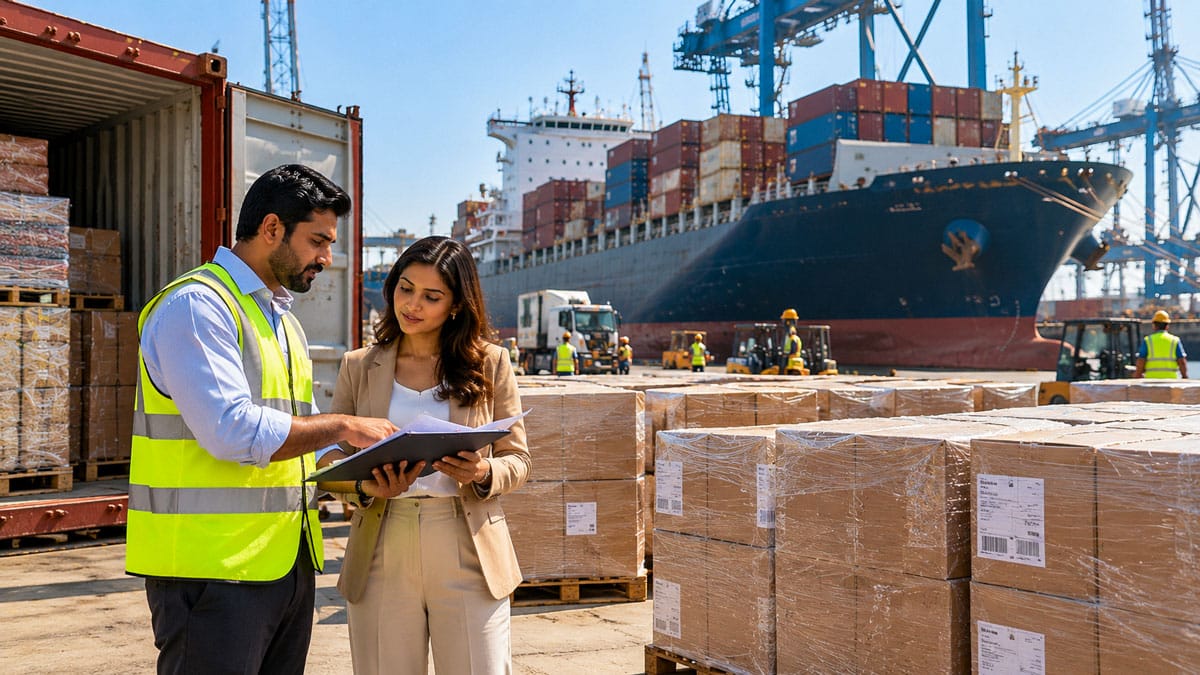
Once a term is agreed, the practical process follows a fairly consistent path. Production is completed and inspected, the goods are booked onto a vessel, and export documentation, including the commercial invoice, packing list and bill of lading, is prepared. The shipment then moves by sea to the destination port, where import clearance and duty payment take place before the goods move on to a warehouse or store. Ocean freight to Australia, the UK, Europe or the US each carry different transit times, so this is worth confirming specifically for your route rather than assuming a standard figure.
What to confirm with a supplier before the first order
A few questions upfront save confusion later. Confirm which Incoterm a quote uses, not just the total figure. Ask what the production lead time is, separately from the shipping transit time, since buyers sometimes only account for one of the two. Confirm who provides the documentation your customs broker will need, and check whether the supplier has shipped to your specific country before, since export experience to a market usually means fewer surprises at your end during import clearance.
How Sheen Tex India supports buyers through this
We export to Australia, the United Kingdom, Europe and the United States, and we work with both FOB and CIF terms depending on what suits a buyer’s own freight arrangements. Because we manage production, packing and export documentation in-house at our facilities in Panipat, we can give buyers a clear, realistic timeline from order confirmation through to the vessel booking, rather than passing that uncertainty on. For new buyers, we talk through which Incoterm makes sense for a first order before it is placed, not after. See our infrastructure page for more on how our production is organised, or our guide to sourcing a full home furnishings range for the wider sourcing picture.
How to start
Tell us your destination country and the volumes you are planning, and we will recommend the Incoterm that fits your setup and confirm a realistic production and shipping timeline before you commit to an order. Get in touch to start a conversation.