Bath mats are an easy category to underestimate. They are small, they sit on the floor, and they rarely get the attention a rug or a cushion range does when a buyer is planning a season. But bath mats turn over quickly, they are simple for a customer to buy on impulse, and a well-designed range can carry real margin. This guide covers what to look for when sourcing them.
Why bath mats are worth a proper range, not an afterthought
A bath mat range sits at a lower price point than most other soft furnishings categories, which makes it a genuine entry point for new customers and a strong repeat-purchase item for existing ones. Because bathrooms get refreshed more often than a living room, bath mats also turn over faster than rugs or throws, which means a well-stocked range keeps customers coming back within the same year rather than every few years.
The main construction types
Bath mats are made in a handful of distinct constructions, and each suits a different part of a range.
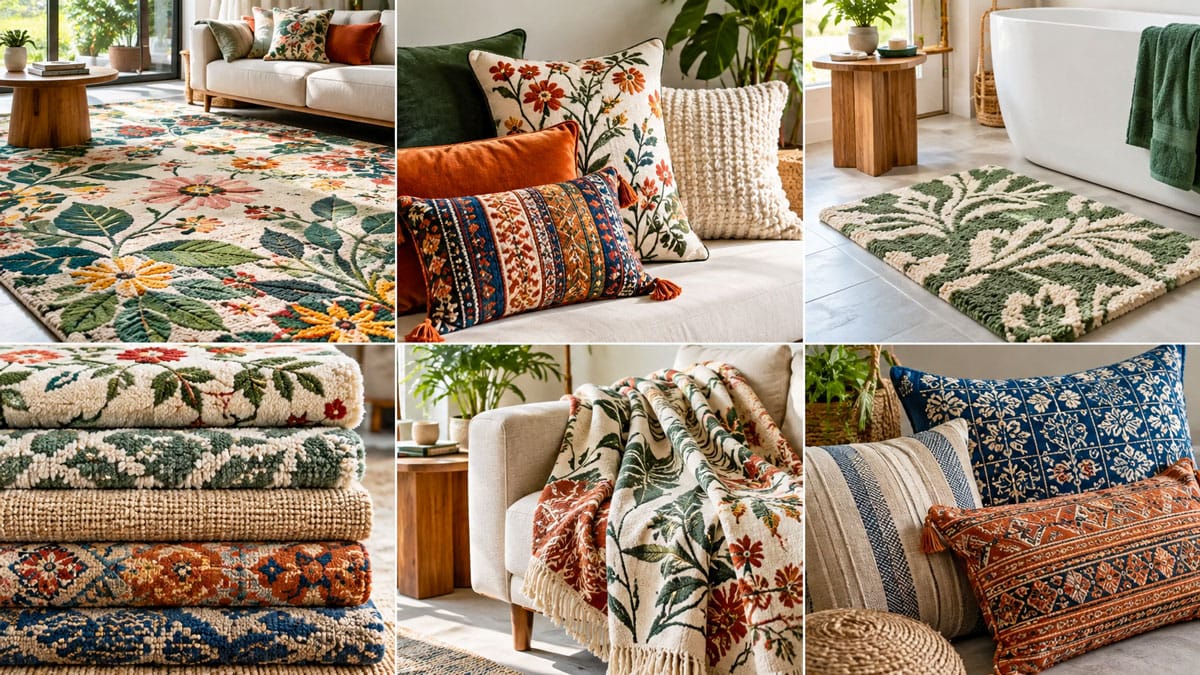
- Tufted pile mats. Made the same way as a tufted rug, with yarn punched into a backing. These allow detailed patterns, including dense floral and geometric designs, and a soft, absorbent pile.
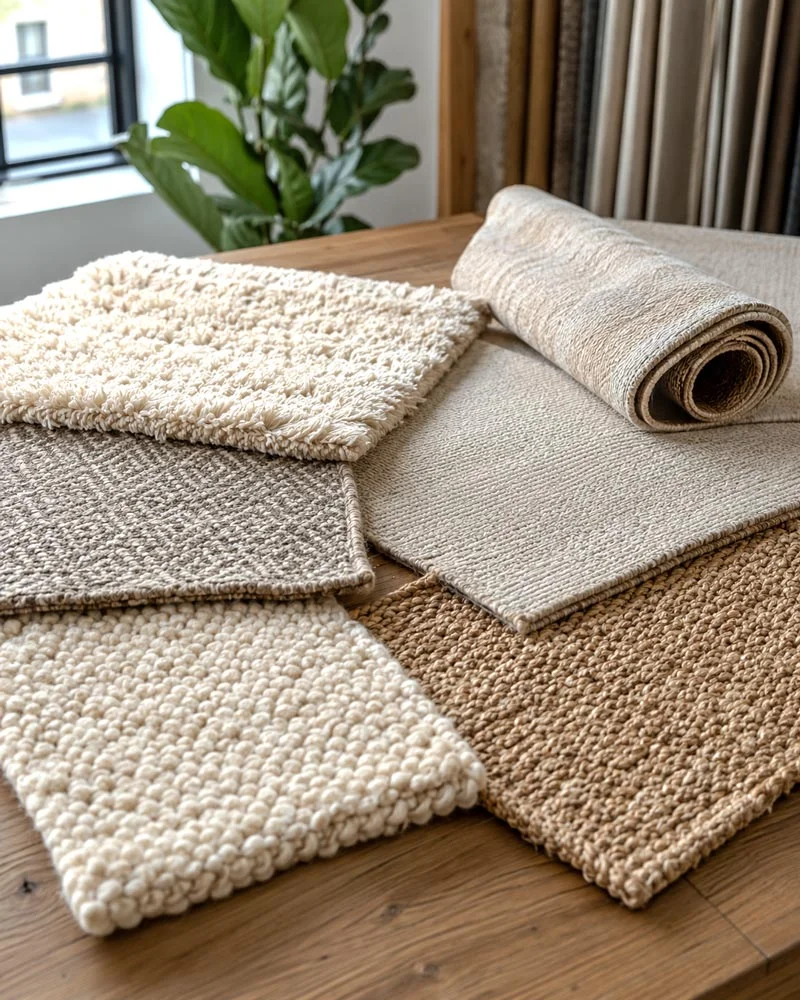
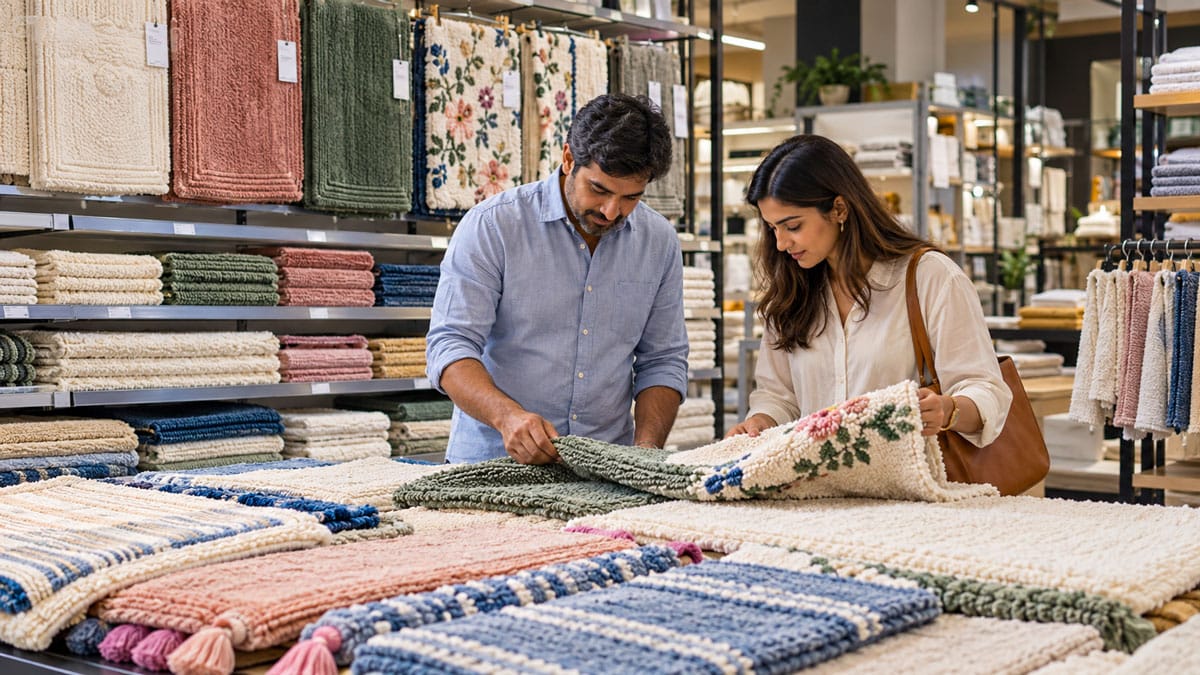
- Bobble and chenille-loop mats. Built from looped or bobbled yarn rather than a cut pile, giving a textured, tactile surface that reads as premium and pairs well with a striped or ombre colourway.
- Woven and flatweave mats. Thinner and quicker to dry, often used for a more casual, natural-fibre look.
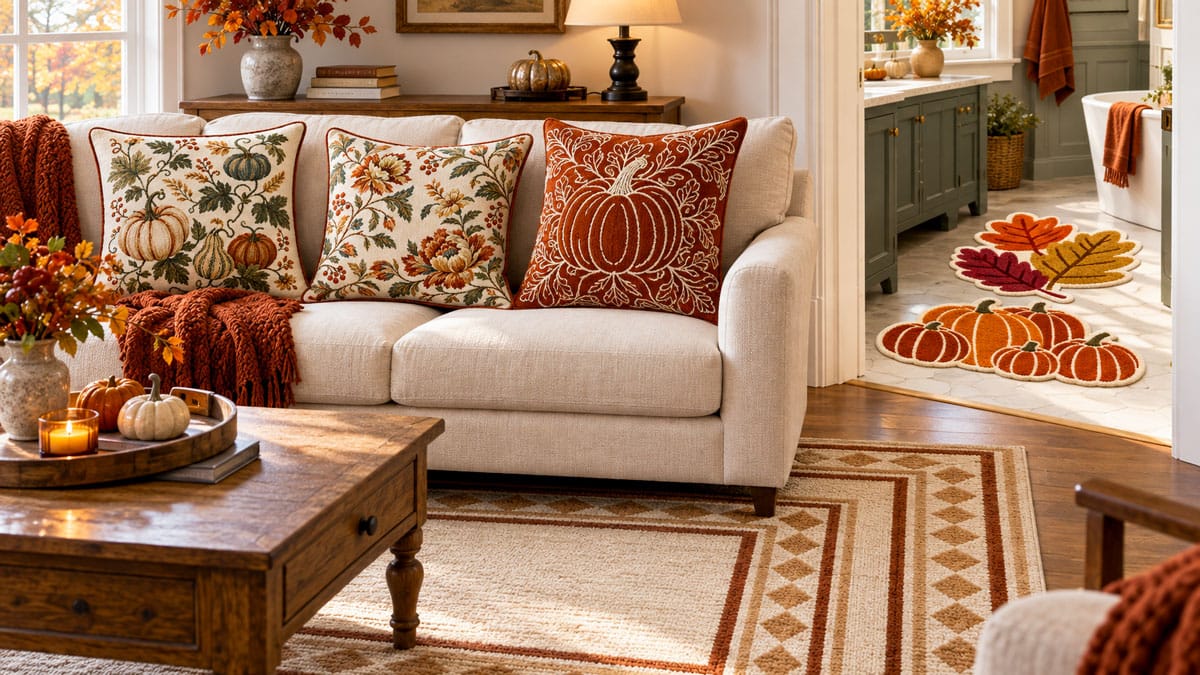
- Shaped and novelty mats. Cut to a shape rather than a standard rectangle, such as a leaf or a cluster of pumpkins for a seasonal range. These work well as a smaller, higher-margin addition alongside a core rectangular range.
Design styles that are performing well
Within these constructions, a few design directions cover most of what a range needs. Dense floral patterns, a full or bordered arrangement of flowers rather than a single small motif, continue to be strong sellers. Geometric and medallion patterns, built from radiating or fan-shaped elements, suit a more contemporary bathroom. And textured, low-pattern pieces, such as a bobble-stripe mat in a soft, blended colourway, work as a quieter option for buyers who want texture rather than print. A well-built range usually carries at least one option from each of these directions rather than leaning entirely on one.
Materials and backing
Cotton is the most common pile material for tufted and bobble bath mats, chosen for softness and absorbency. Backing matters as much as the pile. An anti-slip or latex backing keeps the mat in place on a tiled or wet floor, and this is worth confirming specifically, since a mat that slides is a mat that gets returned. Ask a manufacturer what backing options they offer and which suits which construction.
Sizes, sets and coordination
Bath mats are commonly sold as a single standard size, a runner-length size for in front of a shower or tub, or as a matching set of two sizes. A design that works as a two-piece set, a larger mat for the main floor and a smaller contour or step mat, tends to increase average order value without adding a new SKU from scratch. If a design also has a coordinating cushion or throw, as with a shared print run across categories, that is worth flagging to a buyer building a bathroom-and-bedroom range together.
Minimum order quantities, lead times and samples
Minimums for bath mats are generally lower than for rugs, since the constructions use less material and machine time per piece, but they still vary by pattern complexity. A simple textured mat carries a lower minimum than a detailed multi-colour floral. Lead times follow the same logic. As with any category, ask for a pre-production sample before committing to a bulk run, particularly for a new print or a shaped, novelty design where the cut line needs to be right.
What to check before you commit to a supplier
Beyond the design itself, confirm a few practical points. Ask whether the mat is machine washable and what the care instructions are, since this affects your own product labelling. Confirm the backing type and whether it is suited to a wet, tiled floor rather than carpet. And ask whether the manufacturer makes bath mats as a genuine in-house category, with its own tufting and finishing line, rather than as a small side-line to a rug business, since that affects both design range and consistency.
How Sheen Tex India approaches bath mats
We manufacture bath mats in-house at our facilities in Panipat, across tufted, bobble and woven constructions. Our current range includes dense floral designs, geometric and medallion patterns, and textured bobble-stripe mats, along with shaped seasonal pieces such as leaf and pumpkin motifs for holiday ranges. Our in-house design team works to the colours and styles that sell in Australia, the United Kingdom, Europe and the United States, and can develop a bath mat range that coordinates with a wider cushion or throw collection. For more on our full soft furnishings range, see our products page, and our guide to rug materials covers fibre choices that also apply to bath mat piles.
How to start
Tell us the size, style and volume you are planning, and we will recommend constructions and send samples so you can check pile, backing and colour before committing to a bulk order. Get in touch to start a project.