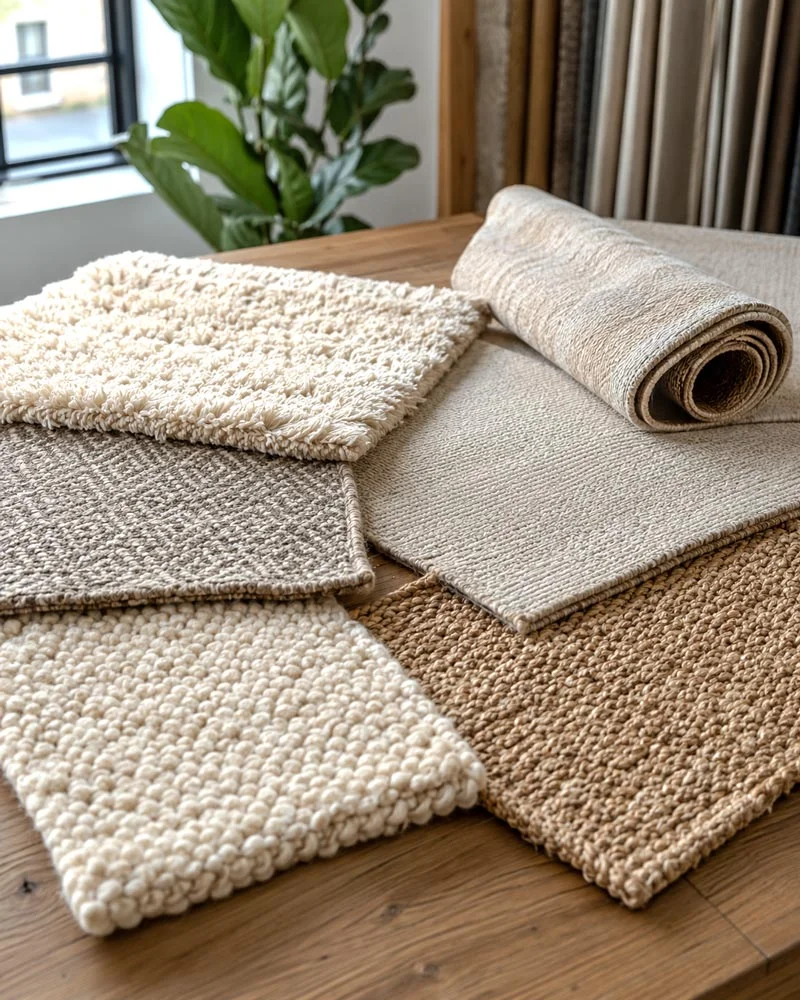
The material a rug is made from shapes almost everything about it: how it feels underfoot, how it wears, how it is cared for, and what it costs. For a buyer building a range rather than choosing a single rug, the decision is less about which material is best and more about which mix of materials covers the price points and use cases your customers need. This guide works through the main options.
Why material drives a range
A single rug material rarely covers a full retail range on its own. Entry price points need a durable, affordable synthetic. Mid-range needs something that balances feel and value. Premium needs a natural fibre with a genuine quality story. Most successful ranges use two or three materials across the collection, matched deliberately to where each product sits. Understanding the trade-offs of each fibre is what makes that matching possible.
Natural fibres
Wool is the benchmark natural fibre for rugs. It is durable, naturally stain-resistant, and springs back after being compressed, which means a wool rug holds its pile far longer than most synthetics under everyday foot traffic. It costs more to produce and needs more careful cleaning, but it remains the fibre most associated with quality in the category.
Cotton offers a softer, more casual alternative to wool, at a lower price point. It is comfortable underfoot and works well in flatweave and dhurrie-style constructions, though it wears faster than wool in high-traffic areas.
Jute brings an earthy, textural look and is genuinely sustainable to grow, requiring minimal water and no pesticides. The trade-off is that it is more absorbent than other fibres, so it marks easily with spills and is less forgiving in wet-prone areas.
Viscose, sometimes labelled as bamboo silk or art silk, gives the visual appeal of silk at a fraction of the cost. It has a soft, lustrous feel that works well in low-traffic, formal spaces, but it is genuinely less durable and needs immediate attention when spills happen.
Synthetic fibres
Polypropylene is the workhorse synthetic fibre for rugs. It is affordable, highly stain-resistant, and holds up well to moisture, which makes it a strong choice for high-traffic and outdoor use. It does not match the feel or longevity of wool, but for value-led ranges it is difficult to beat.
Polyester sits close to polypropylene but offers a softer hand feel, which makes it a better fit where comfort matters as much as durability, such as bedroom ranges.
Recycled yarns
Recycled polyester and recycled cotton have become a meaningful third category rather than a niche add-on. Rugs made from post-consumer or post-industrial waste, verified through the Global Recycled Standard, now sit across price points from entry to premium, and increasingly buyers expect at least part of a range to carry this option. Performance is comparable to virgin equivalents in most constructions, so the main consideration is confirming the certification rather than any real trade-off in the finished product.
Matching material to price point and market
Beyond the fibre itself, think about where each material sits in your range and who it is for. Entry price points generally call for polypropylene or a blended synthetic, chosen for stain resistance and cost. Mid-range often works well with cotton or a wool blend, balancing feel and price. Premium ranges usually lean on wool or a genuine natural fibre story, where the quality of the material is part of what justifies the price. Markets differ too: buyers in some regions weight natural fibres and sustainability credentials more heavily than others, so it is worth confirming what matters most to your specific market before finalising a range.
Care and labelling
Material also determines the care instructions you put on a product, which matters for both customer experience and returns. Wool and jute typically need spot cleaning rather than machine washing. Polypropylene and many recycled synthetics tolerate more robust cleaning and are more forgiving of moisture. Getting this right on the label reduces returns from customers who have cared for a rug incorrectly, so it is worth confirming exact care instructions with your manufacturer for each construction rather than using generic wording across the whole range.
How Sheen Tex India works across materials
We manufacture rugs and carpets in wool, cotton, polyester, polypropylene, viscose, jute and recycled yarns certified to the Global Recycled Standard, in both woven and tufted constructions. Because we work across this full material range in-house, we can help you build a range that spans price points from a single supplier, rather than sourcing wool from one factory and polypropylene from another. Our design team can also advise on which materials suit the markets we export to, including Australia, the United Kingdom, Europe and the United States.
For more on construction types specifically, our guide to rug and carpet manufacturers in India covers woven, hand-tufted, machine-tufted and printed rugs in detail.
How to start
Tell us the price points and use cases your range needs to cover, and we will recommend the materials and constructions to match, along with samples so you can feel the difference before committing to a bulk order. Get in touch to start a project.