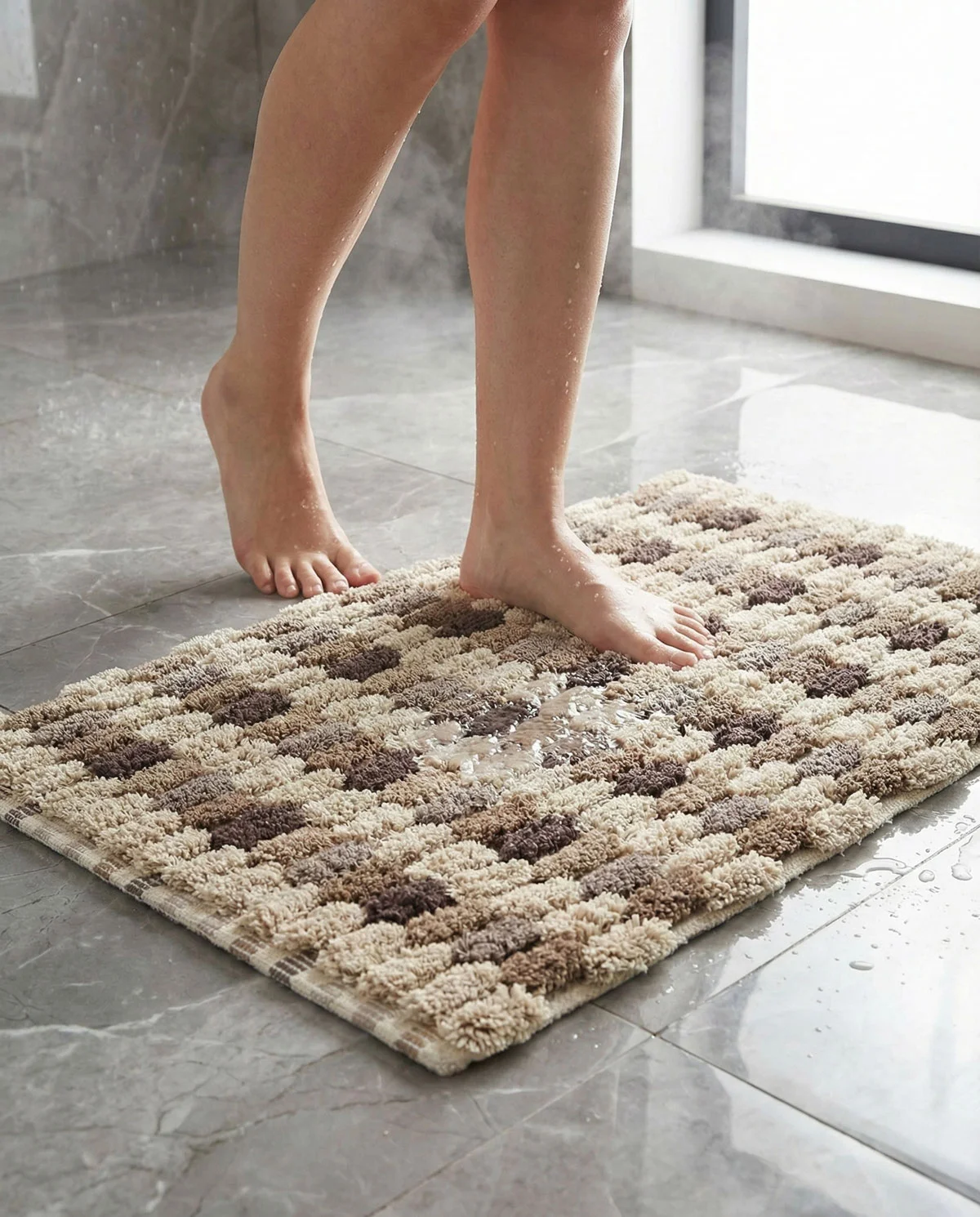
Bathmats seem simple: textile, absorbent, durable. But retail performance tells a different story. High returns, customer complaints, and shelf space waste often point to one root cause—the manufacturer didn’t engineer for retail scale.
This guide explores what separates premium bathmat manufacturers from those who struggle to deliver consistency. We’ll cover the science of absorbency, the engineering of durability, and the systems that keep performance predictable across thousands of units.
Retail buyers often underestimate bathmat complexity. They assume all bathmats are essentially the same—just textile with a backing. In reality, the difference between a premium bathmat and a standard one manifests in:
- Water absorption speed and capacity
- Durability through repeated washing
- Grip performance on various floor types
- Shape retention over time
- Color consistency batch-to-batch
A bathmat that feels great initially but degrades after 5 washings generates returns and damages your brand reputation. A well-engineered bathmat maintains performance across dozens of wash cycles, drives repeat purchases, and builds customer loyalty.
The Science of Bathmat Absorbency
Absorbency is not just about material; it’s about engineering.
Premium bathmats use multi-ply, high-quality yarn that retains water absorption across multiple wash cycles. But yarn selection is only the beginning.
Yarn Selection
The base material determines absorbency ceiling. Premium manufacturers source high-quality cotton or cotton-blend yarns engineered for moisture retention. But not all yarn is created equal.
Key specifications to understand:
- Ply count: Multi-ply yarn (twisted strands) holds more water than single-ply
- Twist density: Tighter twists create stronger yarn that maintains absorbency through washing
- Fiber quality: Premium long-staple cotton (like Pima or Egyptian) absorbs more water and lasts longer than standard short-staple cotton
- Blend composition: Cotton-polyester blends offer absorbency advantages while improving durability and drying speed
A manufacturer sourcing mid-quality cotton and cutting on ply count is prioritizing cost over performance.
The Tufting Process
Bathmats are typically produced using tufting machines—needles punch yarn through a backing fabric to create the pile surface. The density of the tufts directly affects absorbency:
- More tufts per square inch = higher water absorption
- Tufting machines with 560+ needles create denser pile than machines with fewer needles
- Pile height affects both absorbency and durability
- Pile density must be engineered to balance absorbency with durability
A machine punching 300 needles per inch creates a sparser pile than a 560-needle machine. The difference in performance is dramatic.
Backing Technology: The Critical Layer
The backing layer is critical—it provides structural integrity and prevents water from seeping through to the floor. This is where many bathmat manufacturers cut corners, and it’s where performance fails.
Premium manufacturers use:
- Gel foam latex backing: Soft, flexible, water-resistant. Ideal for residential use. Provides grip without harshness.
- Hot melt latex: Strong, durable, consistent adhesion. Handles high-traffic environments well. Better grip than gel foam.
- Spray latex applications: Even coverage across the entire backing, ensuring consistent performance across all areas of the bathmat.
The Performance Connection
Higher pile density (from 560+ needle machines) combined with premium yarn and proper backing creates a bathmat that:
- Absorbs water faster
- Dries more quickly
- Resists mildew and odor
- Maintains grip through moisture
- Survives repeated washing without degradation
Standard bathmats, manufactured with lower-density tufting and cheaper yarn, feel acceptable initially but deteriorate quickly.
Durability Testing Standards
Retail buyers need bathmats that survive thousands of wash cycles without degradation.
Premium manufacturers test for:
Shrinkage Resistance
Controlled washing cycles (following international standards like AATCC or ISO) simulate real-world use. Quality bathmats maintain dimensional stability across 20+ wash cycles. This matters because:
- Customers expect their bathmat to fit their bathroom space consistently
- Unexpected shrinkage damages the product’s usability and generates returns
- Batch consistency requires tight shrinkage control
A manufacturer unable to guarantee shrinkage stability is cutting corners on yarn quality or pre-shrinking processes.
Colour Fastness
UV exposure and repeated washing can fade colors. Premium manufacturers ensure dye penetration and fixing during production, resulting in color consistency across the product life.
Testing includes:
- Wash fastness (color retention through repeated washing)
- Light fastness (color retention under retail and home lighting)
- Crocking resistance (color rubbing off onto other surfaces)
Poor color fastness causes:
- Visible fading within weeks
- Color bleeding onto other textiles
- Complaints and returns
- Damaged brand reputation
Tensile Strength
The tuft holding power and backing durability are tested under load. Poor-quality bathmats show tuft loss or backing separation after just a few weeks of use. Premium bathmats maintain pile integrity and backing adhesion through years of use.
Testing simulates:
- Foot traffic wear
- Repeated wet/dry cycles
- Backing stress and separation resistance
- Edge durability (a common failure point)
Anti-Slip Performance
Especially important for safety. Premium bathmats undergo grip testing on various floor types (tile, wood, vinyl) to ensure slip resistance remains effective, even when wet.
This testing prevents:
- Slip-and-fall liability
- Customer safety concerns
- Returns due to “too slippery” complaints
The Testing Protocol Matters
Ask prospective manufacturers about their testing protocols. Red flags include:
- Vague answers about durability testing
- Unwillingness to provide test results
- Testing only by the manufacturer (no third-party verification)
- Limited testing scope (e.g., only testing color fastness, not shrinkage)
Production Capacity and Consistency
What enables a manufacturer to produce 10,000 identical bathmats?
Advanced Machinery
Tufting machines with 560+ needles per unit and precise speed control ensure uniform pile height and density. Older, slower equipment produces inconsistent results because:
- Needle wear causes uneven pile height
- Speed variations create density inconsistencies
- Manual adjustments between batches introduce variation
Modern machinery maintains consistency through:
- Automated needle height adjustment
- Consistent machine speed
- Predictable yarn tension
- Digital controls that maintain specifications across production runs
Defined Workflows
Quality-first manufacturers have documented processes for:
- Yarn tensioning (too loose = uneven pile, too tight = tuft breakage)
- Backing application (uneven backing = performance inconsistency)
- Backing drying (improper drying = poor adhesion)
- Packing (inconsistent packing = damaged product in transit)
Each step is performed identically, every time, across thousands of units.
Quality Checkpoints
Random sampling and inspection at multiple production stages catch defects before they reach retail:
- Post-tufting: Pile height and density inspection
- Post-backing: Adhesion quality verification
- Finished product: Color, size, and performance verification
- Pre-packing: Final quality check before dispatch
A manufacturer with fewer checkpoints has lower visibility into quality issues.
Capacity Headroom
True capacity means the manufacturer isn’t running machinery at maximum all the time—there’s room for quality without cutting corners when volumes spike.
Consider two scenarios:
Scenario A: Manufacturer runs at 95% capacity. When you place a large order, they either delay existing customer orders or rush your production to maintain timelines. Either way, quality suffers.
Scenario B: Manufacturer runs at 70-80% capacity. Your large order is absorbed without stress. Production speed remains consistent. Quality maintains.
Always ask about current capacity utilization. A manufacturer with intentional headroom signals confidence in their ability to scale without compromise.
Certification and Compliance
Retail bathmat buyers expect products to meet international safety and performance standards.
Premium manufacturers hold:
OEKO-TEX Standard 100
Confirms the product contains no harmful substances including:
- Heavy metals
- Pesticides
- Chemical dyes
- Formaldehyde
- Phthalates
This certification matters because:
- Customers (especially parents) prioritize safety
- Regulatory bodies are increasingly strict about harmful substances
- Retailers face liability if products contain prohibited chemicals
- Brand reputation is damaged by safety concerns
SEDEX Certification
Verifies ethical production and responsible sourcing:
- Fair labor practices
- Responsible chemical management
- Environmental responsibility
- Transparent supply chain
SA8000 Certification
Ensures fair labor practices:
- Safe working conditions
- Fair wages
- No child labor
- Freedom of association
Why Certifications Matter
These aren’t just paperwork—they represent:
- Regular audits by independent third parties
- Documented processes and controls
- Ongoing compliance verification
- Accountability and transparency
A manufacturer lacking these certifications either hasn’t invested in compliance infrastructure or is actively hiding poor practices.
Red Flags
- Manufacturer claims they don’t need certifications
- Certifications exist but documentation is unavailable
- Certifications are outdated or not renewed
Premium manufacturers proudly display certifications and provide documentation.
Choosing the Right Bathmat Manufacturer
When evaluating suppliers, ask:
1. What is your current tufting capacity?
Look for 560+ needle machines. This indicates investment in quality and capacity.
2. How many wash cycles do you test before dispatch?
Premium manufacturers test 20+ cycles. Standard manufacturers might test 3-5 or not at all.
3. What backing technology do you use, and why?
Listen for specific recommendations based on your use case (residential vs. hospitality, different floor types).
4. Can you provide samples across 3–5 production lots to verify consistency?
This is the real test. If samples from different production dates look and perform identically, the manufacturer has process control. If they vary, the manufacturer cuts corners.
5. What is your minimum order volume?
Capacity constraints indicate smaller scale. Premium manufacturers accept lower minimums because they have capacity headroom.
6. Do you have existing retail customers across multiple markets?
If yes, they’re operating at proven scale. You can ask for customer references to verify delivery performance.
7. What certifications do you hold?
Premium manufacturers hold OEKO-TEX, SEDEX, SA8000, and BCI.